This paper will focus on energy sector in Kenya and examine the ways through which the factors of production may be used to redistribute income and contribute towards the big four agenda that is being championed by the government of Kenya. The energy sector is a key enabler in realizing the big four agenda set by the government as it interlinks all the agendas in various ways. The methodology adopted is review of the projects in the energy sector that have been implemented by the year 2018 and points out the possible ways that energy sector can help redistribute income and contribute towards the big four agenda.
Introduction
Kenya as a country like any other has its own factors of production – land, capital, labour and entrepreneurship. It is important to note that the allocation of factors of production have a distributive effect on income and wealth in a society. From the available literature it is assumed that the factors of production are freely and countlessly mobile between firms within an industry and between industries within a country, but are immobile between countries.
The rationale for the first assumption, that factors are freely mobile within an industry, is perhaps closest to reality (“Trade: Chapter 70-0: Factor Mobility and Trade - Overview,” n.d.). In that the labour and the productivity of capital are likely to be very similar across firms producing identical or closely substitutable products. Although there would likely be some transition costs incurred, such as search, transportation and transaction costs, it remains reasonable to assume for simplicity that the transfer is costless (“Trade: Chapter 70-0: Factor Mobility and Trade - Overview,” n.d.). As a result, this assumption is rarely relaxed. The other assumption has had harsh criticism of being unrealistic, especially in the short run; that factors are easily movable across industries within a country. Up to this point, one can deduce that the cost of factor mobility varies widely across factors of production. With some factors like labour being relative costless to move while others are costly.
In recent times Kenya has embarked on transforming its economy basing on four key areas; housing, agriculture, manufacturing and health care. These four areas are expected to spur the economy to grow by double digits and in turn achieve income redistribution in the country where a few control the many at the present.
Factors of production in energy sector in Kenya
i. Land
In Kenya land has been and is still a contentious issue. Even with efforts by the government to solve some issues surrounding land. It has proved to be dynamic from one community to another and as a result impend the energy sector from fully exploiting the resources.
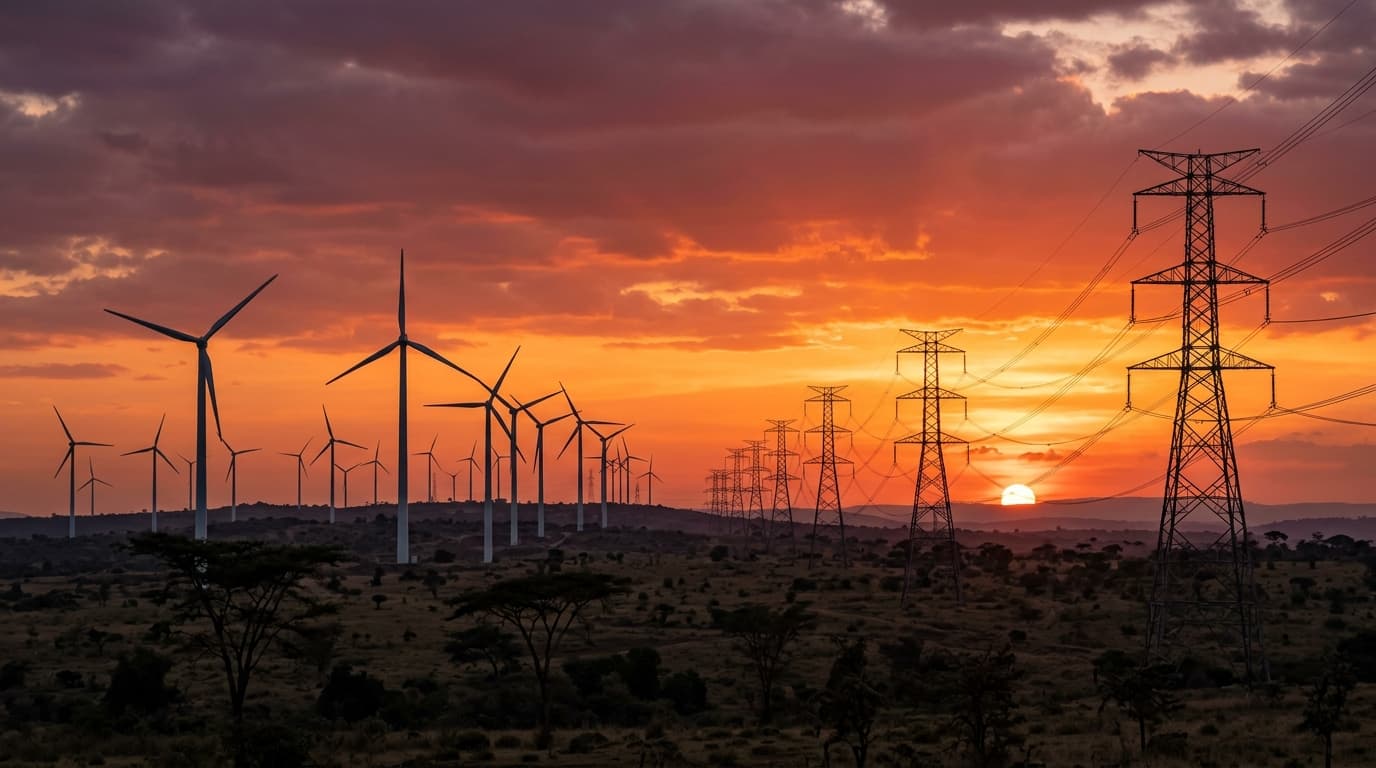
For example, stopped evacuation of electricity from the new wind farm near Lake Trukana by not allowing way levers to go through the land. This slowed down the electricity project and in turn costed the tax payers a lot since electricity produced was not used and also depended on the expensive electricity produce by diesel generators.
Also still in the same area with the discovery of petroleum and drilling it, land in the area was owned by community for grazing has brought about infight to access jobs in the site.
From this it clear that land as a factor of production is vital entity and if not properly managed will impend income redistribution in the country and consequently the other three agendas of the government. To overcome this the government should formulate better policies towards land that reduce the conflict and include all in the process.
ii. Capital
Energy sector unlike other sectors in the economy needs heavy capital investment to be able to actualize the big four agenda. To tackle this the government has allowed huge investment in to the sector by private companies to set up bulk supply of electricity and also explore the oil. Also to help, the government has embarked on streamlining the sector current technologies to allow it to be sustainable. This capital invested has a trickledown effect on income as electricity will be cheap for households and those in manufacturing.
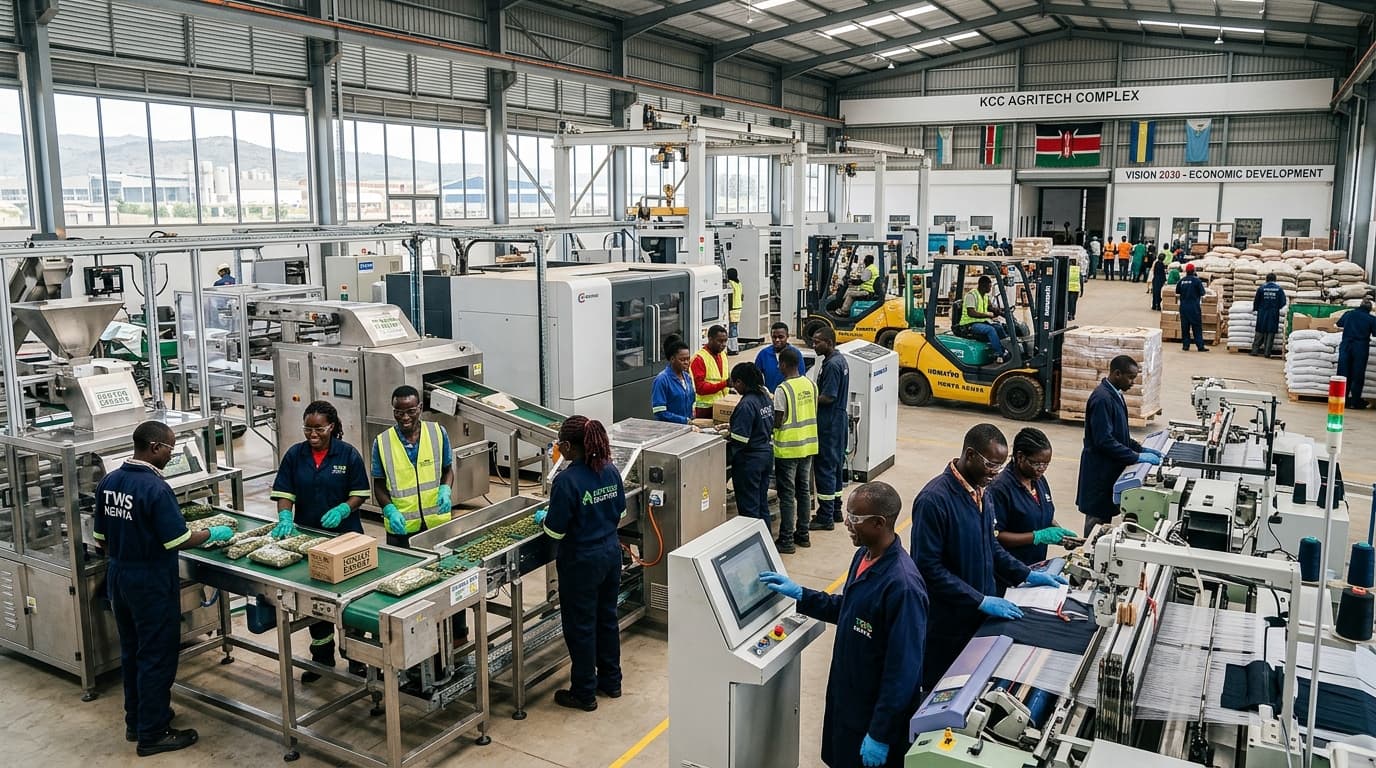
For example, with cheap electricity the textile industry will cut on cost of production allowing it to produce textile for the country and also export. In turn create employment that earn an income to those employed eventually helping redistribute income in the country. Also with cheap electricity household will have access to energy to use in the house and not rely on the firewood and charcoal that has destroyed the environment and with it brought other challenges that derail the living standards of the people.
iii. Labour
Even though the energy sector just like other sectors in the economy uses both skilled and unskilled labourers. It is somehow unique in that during the construction of an energy plant unskilled labour can be used but greatly reduced in the long run of the plant while in the same time different levels of skilled labour will be employed on different phases of the plant as it runs. As a reward for labour are the wages this does not balance between the skilled and unskilled; as one is higher than the other.
In light of this the Kenyan people are not well skilled on areas covering energy so the end up majority in the semi-skilled and unskilled labour force. When they get their low wages despite any increment it does not affect the total effort to achieve redistribution of income; as they are still faced with same challenges that need to be addressed first.
iv. Entrepreneurship
Entrepreneurs in the energy sector have taken a dynamic form as they to keep up with the technology trends in order to maintain being relevant in the sector or risk being out. They are important as they keep the large firms in the sector to also be innovative and not lose their grip in the sector.
One can view entrepreneurship in the energy sector in two ways; first those that have taken the risk to provide energy and secondly those that consume energy. The Kenyan policy on energy act of 2012 has provided a frame work that regulates the sector and setting standards. As such it has catered for both the entrepreneurs that provide energy and those that consume energy. (Government of Kenya, 2012)
Conclusion
The energy sector is mainly of two types basically electricity and petroleum (Kenya National Burea of Statistics, 2017), in light with factors of production and how it can be used to redistribute income and contribute towards the big four agenda that is being championed by the government of Kenya. It is important to note that it cannot be isolated but rather used as enabler for the pillars of the agenda; a means to achieve but not an end in itself. This can be by reducing tariffs on electricity to become cheaper to free up income burden and engaging entrepreneurs on other ways to access energy like solar. Therefore, there is still need to review the energy act policy for better use of the scarcity of factors of production and this will trickle down to help to redistribute income and contribute towards the big four agenda that is being championed by the government of Kenya.
References
- Government of Kenya. (2012). Energy Act . the National Council for Law Reporting.
- Kenya National Burea of Statistics. (2017). Economic survey 2017. Kenya National Burea of Statistics.
- Trade: Chapter 70-0: Factor Mobility and Trade - Overview. (n.d.). Retrieved November 14, 2018, from http://internationalecon.com/Trade/Tch70/T70-0.php